Why Your Farm Needs Active Production Guidance
Traditional Systems only report what happened. Discover how Sentri acts as a digital co-manager, enabling you to build plans directly in the system and turning those targets into real-time guidance for farmhands.
Sentri
Your Digital Manager
From Digital Scorekeeper to Co-Manager:
In traditional swine production, software is often just a digital scoreboard. You build your strategy in a spreadsheet, do the work, and then—days or weeks later—enter the data to see if you won or lost. By the time you realize you missed a KPI, the opportunity to fix it is gone.
Sentri fundamentally changes this dynamic. We don't just report on production; we engineer it. By operating as a digital co-manager, Sentri ensures that the strategy you design is exactly what gets executed in the barn.
Planning Is Not an External Exercise
The difference starts with intent. In most systems, "planning" happens outside the software, and the system is just used to record the results.
In Sentri, the planning happens inside the platform. You define your strategy using a Production Plan Template. This isn't just a calendar; it is a comprehensive roadmap where you set your specific sequence of tasks, operational intervals, and KPI targets before the cycle begins.
Because the plan lives within the system, Sentri understands your goals. It knows what a "successful" batch looks like for your specific operation, allowing it to actively measure reality against your targets every single day.
The "Co-Manager" in the Barn
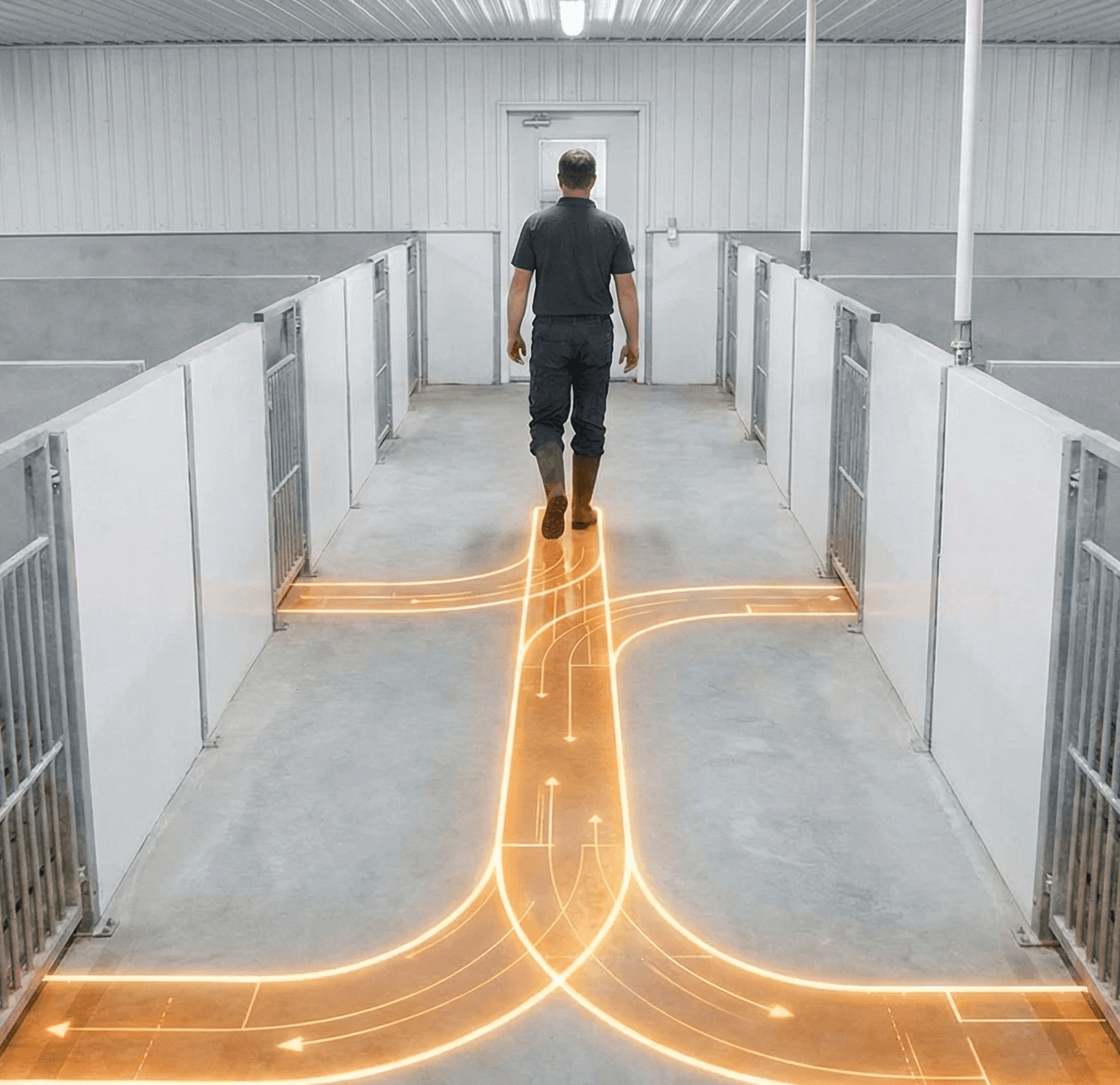
A traditional manager can’t be in every pen at once, but Sentri can. The system takes your high-level plan and automatically converts it into a daily task list pushed to the Mobile App.
For the farmhand, this eliminates guesswork. The app doesn't just ask for data; it guides their performance:
What needs to be done (e.g., Breeding, Weaning Check).
Where it needs to happen (e.g., Unit 1, Pen A).
How to do it better: The system provides context and alerts that help the worker optimize their technique to meet the batch’s specific KPI targets.
This shifts the farmhand's role from "data enterer" to "guided executor."
Data That Gives Back: The Feedback Loop
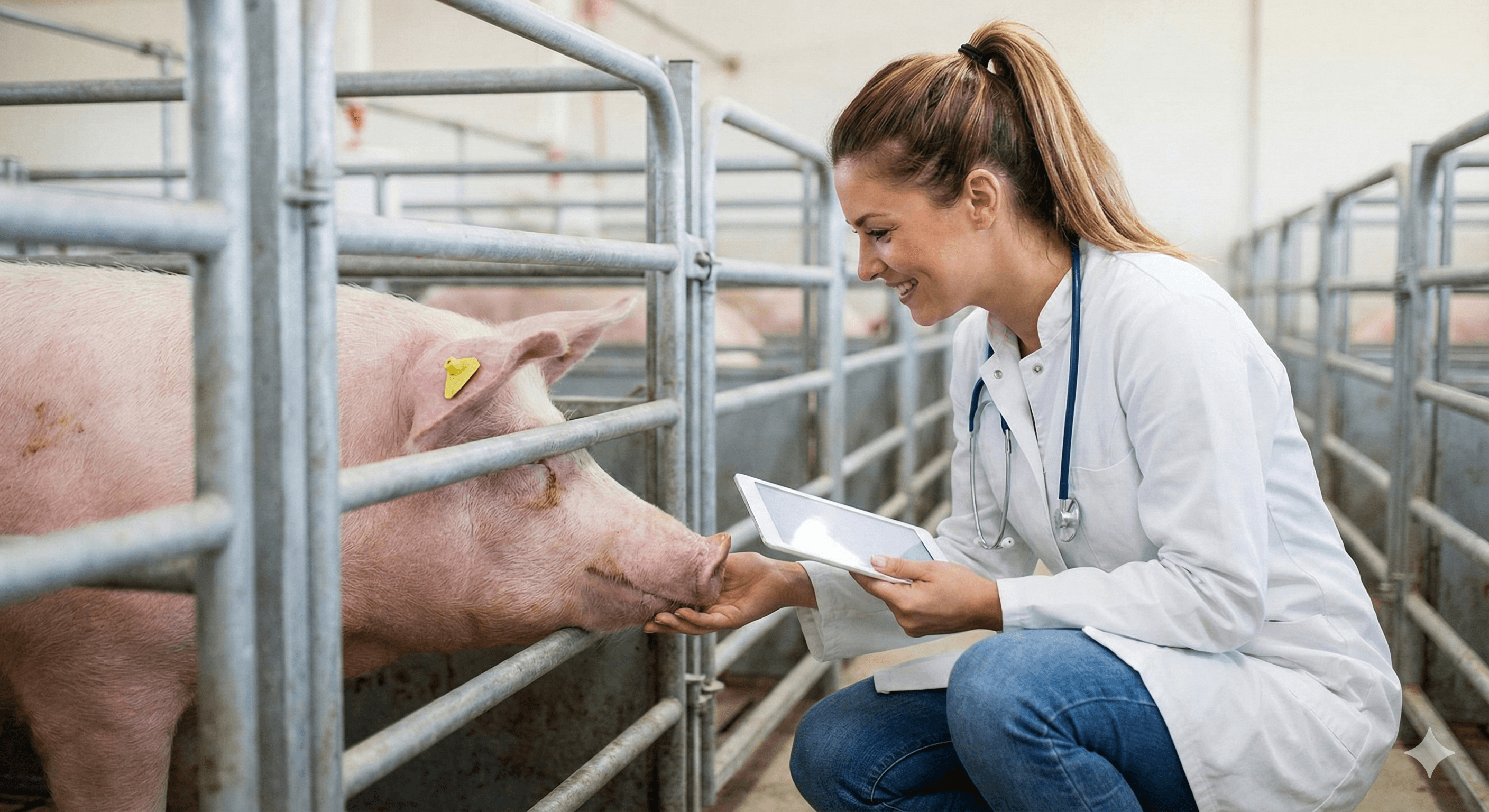
The true power of Sentri lies in how it uses collected data to provide immediate suggestions to the worker. In traditional systems, recording data only helps the manager sitting in the office. In Sentri, recording data helps the person doing the job right now.
The Estrus-to-Breeding Example: Consider the breeding workflow. In a passive system, you record an estrus date, and later you record a mating date. In Sentri, because the system is aware of the biological goals:
Input: The farmhand records a sow’s estrus status during morning checks.
Intelligence: The system analyzes this timestamp against the "Estrus to Breeding Interval" KPI defined in your plan.
Output: When the breeding task starts, Sentri alerts the technician to the optimal mating window for that specific sow, indicating exactly how many hours remain to maximize conception rates.
This is the difference between a database and a co-manager. The system uses past inputs to guide current actions, ensuring you hit your targets.
Traceability as a Byproduct of Action
Finally, this approach solves the burden of data collection. Farmhands don't have to stop working to "do paperwork." Because the app is guiding their actual workflow—telling them which pig to check and where—the data is captured seamlessly as they confirm the task.
Traceability becomes a byproduct of action. You get a complete, audit-ready history of every batch not because you added extra work, but because the system was there helping you do the work correctly in the first place